Position Paper: ‘No energy transition without flexibility’
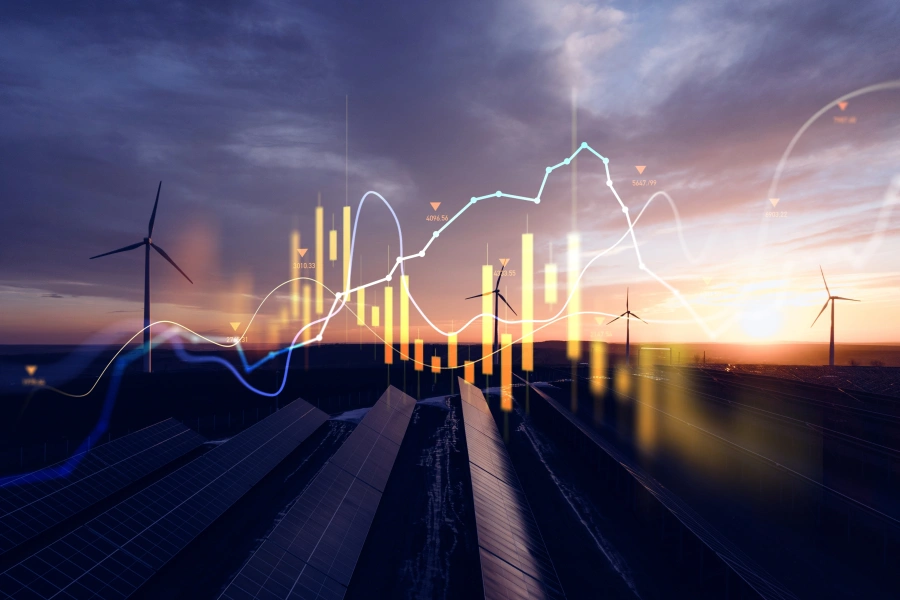
The electricity grid is at capacity. Thousands of companies are waiting for a grid connection, solar and wind parks are forced to curtail production, and investments are being delayed. According to Daan van Lange, senior Investment Manager at the Brabant Development Agency (BOM), there is one lever we can act on today: flexibility. It enables us to make better use of the existing grid capacity.
Key Insights
With the publication of the position paper Towards a sustainable and decentralized energy system, BOM sharpens its perspective on the energy transition. Author Daan van Lange explains why flexibility is a necessary step toward a decentralized energy system. In this interview, Van Lange elaborates on the key insights from the paper.
The energy transition is visibly constrained by the power grid. How urgent is the issue of grid congestion?
“It has become a structural bottleneck. Across large parts of the Netherlands, companies can no longer connect or expand. This is slowing both economic growth and decarbonisation. We are seeing the electrification of mobility, industry and the built environment converge with rapid growth in solar and wind. That combination creates peaks and volatility the current grid was never designed to handle. In Brabant alone, several thousand companies are on waiting lists, delaying investments. This has a direct impact on both our economy and climate ambitions.”
The position paper puts flexibility at the centre. Why?
“Without flexibility, there is no energy transition. Flexibility is not an end in itself, but it is the most effective lever we can pull today. Grid reinforcement remains essential, but it takes years. Flexibility allows us to better align demand, supply and storage within the existing infrastructure. It unlocks capacity that already exists but is not yet used optimally. It prevents the loss of renewable energy and creates room for growth.”
You stress that flexibility is not the end goal. What is?
“The ultimate goal is a decentralized energy system based on local generation, local storage and optimised local consumption. That is a practical way to manage a system dominated by renewables. By nature, renewable energy is variable and often locally produced. That requires local balancing as well. Flexibility helps us move in that direction.”
What does this mean for BOM’s investment strategy?
“We explicitly focus on two horizons. On the one hand, we invest in solutions that can be deployed today, such as software and optimisation technologies that enable flexibility. On the other hand, we continue to invest in deeper technological innovations that will shape the future system, such as new forms of storage or sustainable heat solutions. That combination is essential. It is not a trade-off, but a dual-track approach.”
That marks a shift from a previous focus on hardware innovations. Why include software?
“Historically, investments in the energy sector have focused on capital-intensive technologies. That will remain important, particularly for decarbonising sectors like heavy industry and for building the renewable energy system. At the same time, we see significant potential in software and digital layers that make existing assets smarter. Think of algorithms that forecast and control demand and supply. These may be less visible, but they can deliver substantial impact in the short term. They allow us to extend the value of existing infrastructure and integrate it into a more flexible, decentralized system.”
Where does that impact materialise most clearly?
“In coordination. Flexibility does not come from a single asset, but from the interaction between storage, production and consumption. By coordinating those effectively, you can reduce peaks and release capacity. This can happen at the level of a single industrial site, but also at business parks or within neighbourhoods. Decentralised energy hubs are a good example, where multiple parties share a grid connection and actively manage their energy use together.”
You mention Brainport Industries Campus as a strong example. What does it demonstrate?
“That it works, provided parties collaborate. On that campus, companies share a connection and coordinate their energy use, including generation and storage. This prevents peaks and enables growth within existing capacity. It is not just a technical solution, but also an organisational one. You need agreements, governance and trust. It is a true system-level approach.”
What is currently holding back the scaling of flexibility?
“There are several structural barriers. Regulation is still based on a centralised system and does not align well with decentralised solutions. Market mechanisms are still evolving, creating uncertainty in business cases. And costs are not always distributed fairly. In the paper, we explore these barriers in more detail, as well as the role of new instruments and market developments in overcoming them.”
What role does BOM see for itself in this transition?
“Our role is to connect stakeholders and accelerate progress. The energy transition is not owned by a single actor. Grid operators, companies, technology developers and governments all depend on each other. We invest, but we also build ecosystems and support field labs where new solutions can be tested in practice. That is where the proof points are developed that enable scaling.”
What is your key message to entrepreneurs and partners?
“Do not wait for the system to be fully optimised. There is already room to act and create value through flexibility. And do it together. The biggest progress is made where stakeholders are willing to align their interests and develop solutions collectively. That is also the strength of Brabant. In the position paper, we show how this collaboration can take shape in practice and where the biggest opportunities lie for those who step in now.”
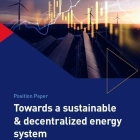
Towards a sustainable & decentralized energy system
Flexibility is not an end goal, but a necessary step. This position paper by Daan van Lange outlines how smarter use of existing grid capacity can alleviate congestion today and pave the way for a decentralized, future-proof energy system.