On quantum hacks and the brains of AI: how Brabant is accelerating NATO innovation

On the day Russia invaded Ukraine, thousands of modems from the American company Viasat went offline. This led to a large-scale loss of communication during the first and most critical phase of the war. Such attacks are likely to occur more frequently, says Flow Collingwood, co-founder of the British company Pan Galactic. “With the arrival of quantum computers, the threat will only increase.” To mitigate these types of vulnerabilities, NATO is deploying DIANA, with Brabant as a key accelerator location.
DIANA stands for Defence Innovation Accelerator for the North Atlantic. It is an innovation programme in which startups, scale-ups and innovative SMEs are selected based on concrete defence challenges. One of the locations where the programme is carried out is the Brainport region. There, international companies such as Pan Galactic and the American firm Aktiver are working on technologies that are not only commercially relevant, but also of military importance (dual use).
Internet in space
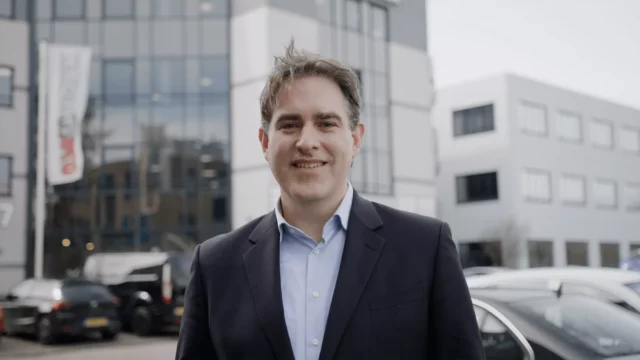
At the beginning of March, Collingwood can be found on the TU/e campus in Eindhoven. Through his company, he is developing a software layer that ensures secure and reliable communication between satellites, even in a future with quantum computers.
In space, you don't have fiber optics. Information is transmitted via radio signals and secured with RSA encryption. Cracking that encryption is trivial for anyone with a quantum computer. It's like having the username 'admin' and the password 1234
Flow Collingwood - Pan Galactic
The arrival of quantum computers is expected within a few years. This poses a major threat to secure information exchange with satellites, says Collingwood. “In space, you don’t have fiber optics. Information is transmitted via radio signals and secured with RSA encryption. Cracking that encryption is trivial for anyone with a quantum computer. It’s like having the username ‘admin’ and the password 1234.”
It is no coincidence that Pan Galactic was selected as a DIANA participant. The company is developing something that NATO needs. It potentially addresses a gap identified by NATO countries themselves: a so-called “capability gap.”
The core of DIANA
These capability gaps are essentially at the heart of how DIANA operates. They are concrete challenges or shortfalls in what defence can do today versus what is required. They are operational problems that need to be solved. Companies that believe they have a solution can apply. A rigorous selection process then determines who is admitted: out of 3,600 applicants, ultimately 150 were selected.
Those chosen take part in an intensive six-month programme. The goal is to drastically shorten the path to adoption of the selected technological innovations. “Defence needed innovation yesterday”, says Collingwood. “Multiple conflicts are escalating. That is why DIANA is so urgently needed.”
Faster access to breakthrough technology
In other words, DIANA aims to ensure that NATO gains faster and more structural access to breakthrough technologies, enabling the alliance to stay technologically ahead and safeguard the security of its member states. Brabant plays a crucial role in this process as an accelerator location. Participating companies receive support from the Brabant Development Agency (BOM), Brainport Development, and Eindhoven University of Technology, which collaborate within The Gate.
The region’s participation clearly delivers societal value. It also brings additional benefits. Participating companies become familiar with Brabant as a leading technology region, while Brainport strengthens its international profile.
“We have been introduced to the Dutch Ministry of Defence and those of other NATO member states. This helps us understand the landscape of defence ministries, which differs from country to country,” says Collingwood about the benefits of participation. “We are learning to speak the language of the defence sector. That is different from what we are used to.”
Understanding the language of defence
In a purely commercial context, the conversation quickly turns to money, says Collingwood. “The solution we offer is technically the same, but the language we need to speak is different. Defence is less focused on cost. It is about protecting lives and delivering products that are reliable under all circumstances.”
Thanks to our participation in DIANA, we can test whether our AI solution is also suitable within a defense context. Ministries of defence have very different requirements from commercial perties. That makes sense. A product must withstand mud and explosions. It has to work everywhere, under all conditions. It must be secure, impossible to breach
Jay Weinberg - Aktiver
And whether a product is truly reliable under all circumstances is something defence prefers to test itself. DIANA provides access to that.
“Thanks to our participation in DIANA, we can test whether our AI solution is also suitable within a defence context,” says Jay Weinberg, co-founder of Aktiver. “Ministries of defence have very different requirements from commercial parties. That makes sense. A product must withstand mud and explosions. It has to work everywhere, under all conditions. It must be secure, impossible to breach.”
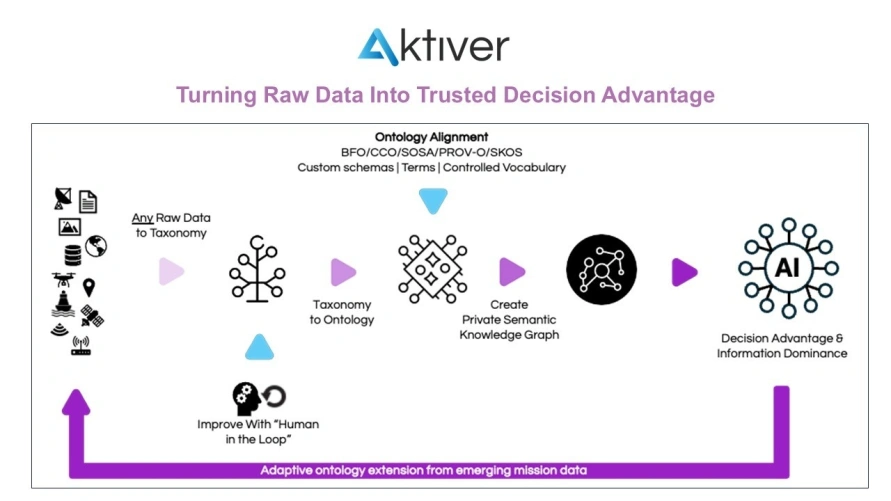
Weinberg and his team develop tailor-made AI agents. “We are essentially building the brains behind agentic AI,” he says. “We connect different datasets, from both inside and outside an organization, so that AI not only recognizes patterns but also understands how information is related. This allows us to build an AI application that is specifically suited to a client and operates solely within that client’s organization.”
Dual use
Like all DIANA participants, Aktiver’s solution is dual use. The AI agents can be applied in both civilian and military contexts. “In healthcare, you can combine various types of data to better support patients. You can create a kind of patient profile. You can link a specific condition with a wide range of studies in that field and generate solutions you might not have identified yourself.”
In a military context, Aktiver’s AI can support analysts, for example in coordinating troop movements. Weinberg: “Or securing an area. What is the most effective approach? Where are the potential vulnerabilities? These are all questions our AI can answer.”
A broader understanding
By participating in DIANA, Weinberg gains a broader and deeper understanding of how NATO operates. “We are also learning, for example, how to develop a pitch deck tailored to the defence industry. What do they want to know? What exactly are they looking for?”
Each ministry of defence has its own structure and procurement processes. Learning about that is extremely valuable
Jay Weinberg - Aktiver
All NATO countries have their own ecosystems, Weinberg explains. “Each ministry of defence has its own structure and procurement processes. Learning about that is extremely valuable.”
Ultimately, his participation is also about building many new connections. “I was here in January as well and met someone from MINDbase at the High Tech Campus in Eindhoven. I spoke with him again this week. He knows several cases where our solution might be a good fit. By participating in DIANA, we can grow our company. And we may be solving a problem that multiple NATO countries are facing.”