Artificial Brain Chooses the Netherlands as European Launchpad for Quantum Innovation
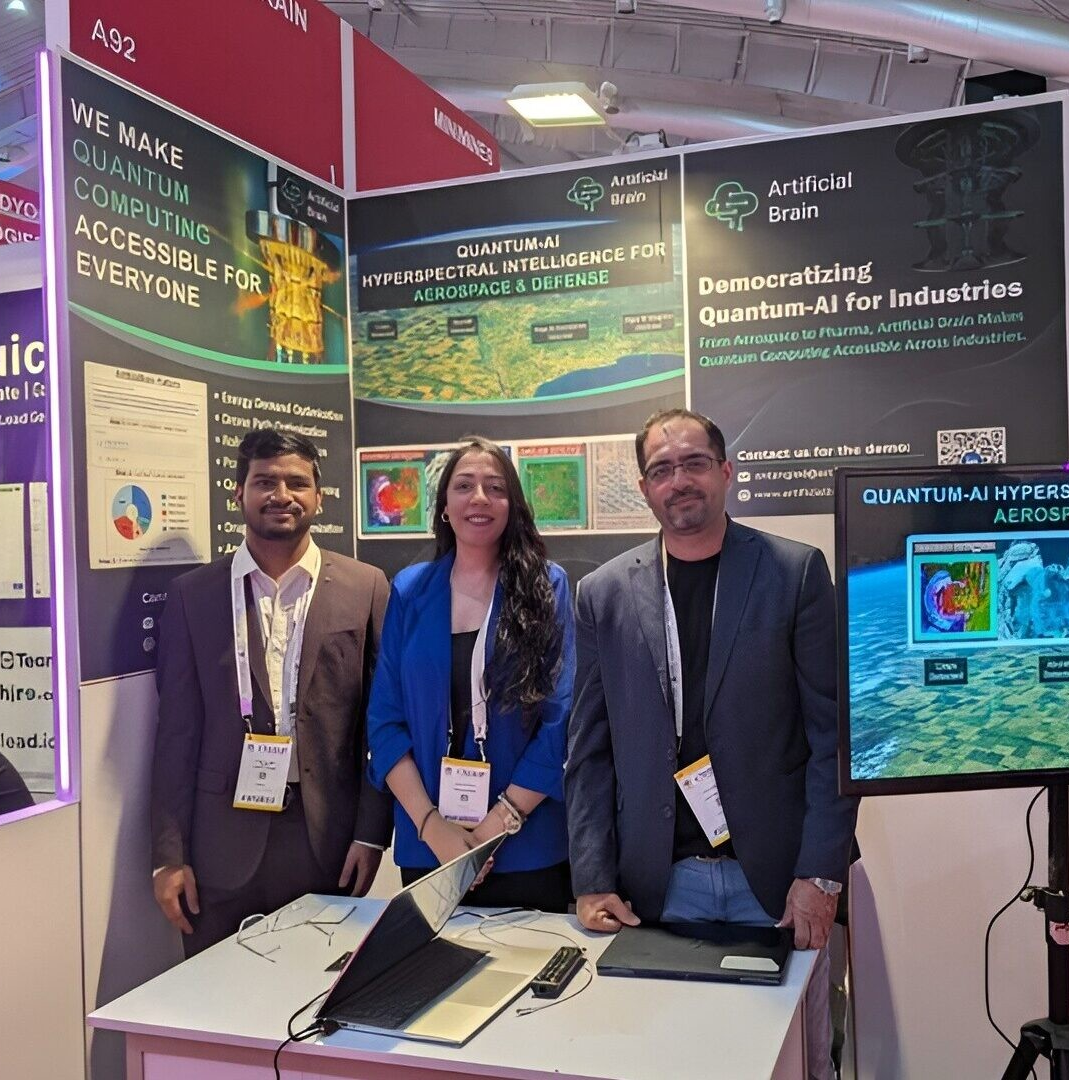
Artificial Brain, a pioneering quantum software company founded in India, has expanded into the Netherlands, marking a significant addition to the country’s dynamic high-tech ecosystem.
The company selected the Netherlands for its central location in Europe, combined with its world-class quantum ecosystem, enabling the company to tap into a broad international, open-innovation community.
The company is known for its flagship platform, PLANCK, which allows customers in defense, aerospace, and energy to solve intricate problems that are beyond the reach of classical computing. The software helps businesses solve complex optimization problems by turning everyday language into fast solutions that use both quantum computing and high-performance computing (HPC).
PLANCK’s unique capability lies in its wisdom-of-the-crowd ranking engine, an AI system that uses the principle of crowdsourcing ideas, in which collective human opinions lead to better decisions. This generates, ranks, and validates multiple formulations to deliver robust outcomes in minutes rather than weeks, without requiring users to have quantum expertise.
Driving innovation in space and energy
The software plays a critical role in the space and energy sectors. In Space, it helps manage satellites, schedule missions, and allocate resources across different orbits, even when conditions like weather or signal delays change in real time. In energy, it improves power grid efficiency by predicting supply and demand, balancing renewable sources, and boosting output from wind farms and ocean systems.
This focus on sustainability is backed by two Dutch government grants for renewable energy projects, and a global partnership with technology leader ABB to model India’s entire energy grid.
A unified quantum ecosystem
After embarking on a search for European expansion in late 2022, Artificial Brain cited the Netherlands’ leading quantum ecosystem, coordinated by Quantum Delta NL (QDNL), as a key reason for their choice.
The Netherlands was chosen by Artificial Brain for its cohesive national strategy on quantum technology, accessible grants, and proven support for quantum commercialization, making it the ideal first European foothold.
A gateway to global collaboration
For its strategic location and world-class connectivity, the Netherlands is already enabling Artificial Brain to tap into a community of innovation-focused organizations.
Collaborations include joint projects with Dutch quantum companies and leading institutions, such as QuTech and TNO (Dutch Organization for Applied Scientific Research), supported by government grants for renewable energy and ocean sustainability. Creating these partnerships have strengthened Artificial Brain’s European connections while maintaining core operations in India.
Support from NFIA and Invest in Holland
Jitesh Lalwani, Founder & CEO at Artificial Brain said: “The Netherlands Foreign Investment Agency (NFIA) and the Invest in Holland network played a pivotal role in our expansion by providing guidance on business setup, tax incentives, and grant applications.
Steps toward a quantum future
The company is contributing to the Netherlands’ ambition of furthering its position as a global leader in quantum technology, while addressing critical challenges in space connectivity and renewable energy optimization. The Netherlands’ aspirations are backed up by €615 millions of public funding for research and development in the field, allocated to QDNL in 2021, creating the ideal conditions for breakthroughs in quantum technology.
The choice of Artificial Brain reinforces the Netherlands’ position as a premier hub for international companies looking to drive new discoveries and applications in the high tech systems and materials ecosystem, and a key destination for businesses tackling the world’s most complex challenges.
Learn more about the Dutch DeepTech Ecosystem
The quantum hub has a strong knowledge base at the University of Technology in Eindhoven and various testbeds such as the open quantum communication testbed and for industrialization, a consortium of high tech manufacturing companies collaborates in the quantum manufacturing alliance (QMA).