From Insight to Impact: On ASML, Diversification and Strong Ecosystems
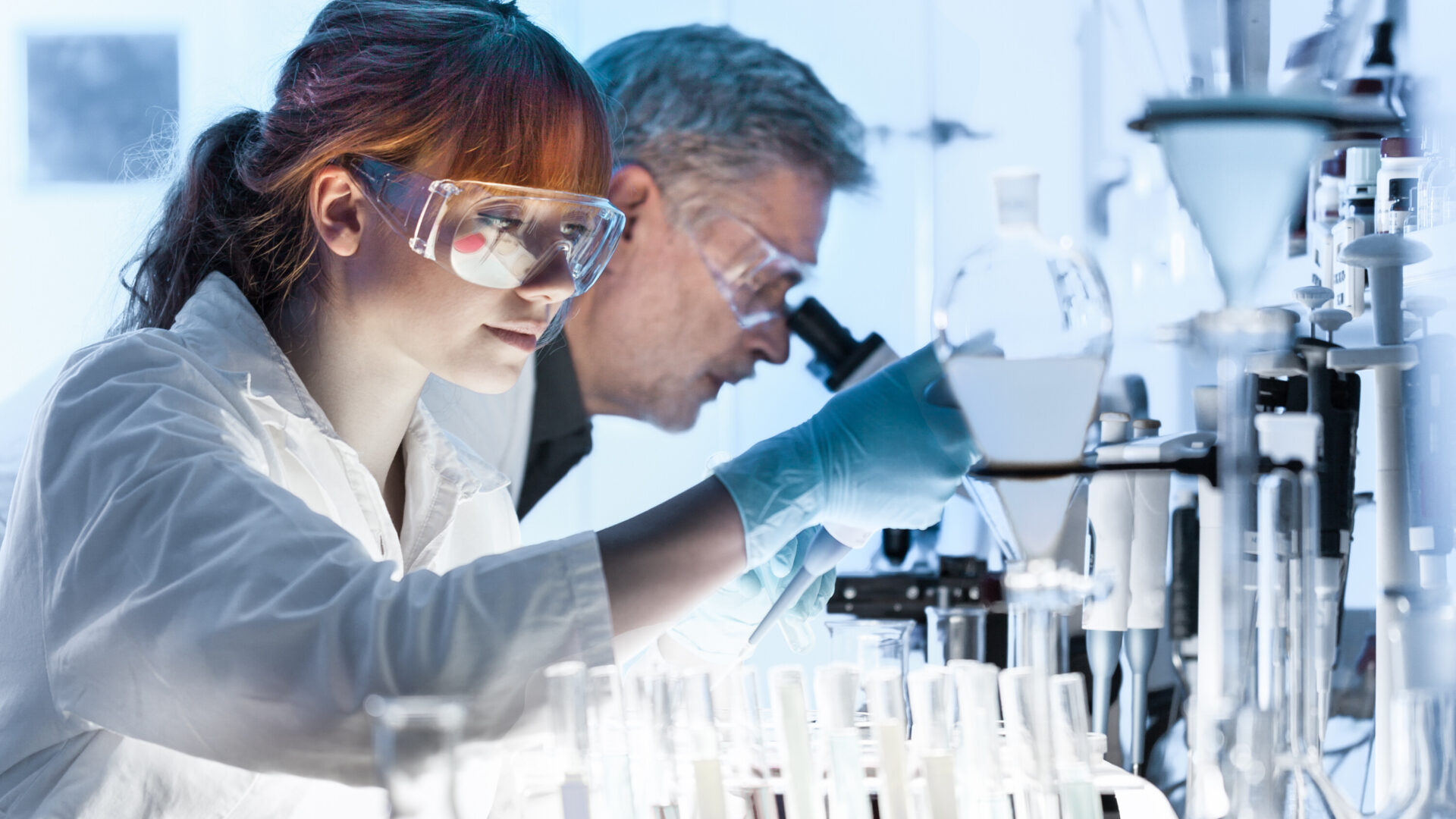
The Brabant economy is strong, yet it is also facing major changes. Otto Raspe and Brigit van Dijk – van de Reijt interpret the latest economic insights for Brabant. How dependent is the region on ASML? What does Peter Wennink’s report mean for the region? And how can we build strong ecosystems across Brabant?
Anyone who looks only at growth figures sees a region that is performing well. Brabant is growing, and Brainport is expanding at an exceptional pace. Yet something is amiss, argue Otto Raspe and Brigit van Dijk – van de Reijt. Raspe is Chief Economist at Rabobank and Professor of Broad Prosperity & Regional Economics. Van Dijk – van de Reijt is a macroeconomist and CEO of the Brabant Development Agency (BOM). Economic growth is not an end in itself, they say. The real question is what that growth produces and whether it lays a sufficient foundation for future prosperity.
To maintain that level of prosperity, the Netherlands needs to achieve structural growth of at least 1.5 percent per year. That threshold has not been met for years, according to former ASML CEO Peter Wennink in his report The Route to Future Prosperity, published late last year.
According to Wennink, the core of the problem lies in declining productivity growth. This observation also forms the starting point of the latest regional forecasts by RaboResearch, Rabobank’s research department, which publishes analyses, insights and economic projections. These forecasts show that only a limited number of regions in the Netherlands consistently exceed this necessary growth rate over the long term.
High-Productivity Jobs as the Engine of Growth
Greater Amsterdam, Greater Rijnmond, Utrecht and Brainport are the main drivers of economic growth in the Netherlands. Over the past 30 years, Greater Amsterdam and Brainport in particular have stood out as the fastest-growing regions in the country.
This is because they have added high-productivity jobs—positions that generate high added value per employee. In Amsterdam, these are primarily knowledge-intensive services; in Southeast Brabant, they are found in high-tech and advanced manufacturing clustered around companies such as ASML, Philips, NXP, Signify, Thermo Fisher and VDL. Around these companies, ecosystems have developed that sustain productivity and, in doing so, create economic space for the rest of the country.
The Dominance of ASML
That exceptional position requires nuance. ASML’s dominance is reflected in virtually all economic statistics for Southeast Brabant. When growth expectations for the Veldhoven-based chip machine manufacturer shift, the entire region moves with it.
We must acknowledge that this dependency exists. That does not call for less ambition in semiconductors, but for accelerating hte strenghtening other Brabant ecosystems, such as medtech, pharma and plant-based
Brigit van Dijk - van de Reijt (Brabant Development Agency BOM)
According to Brigit van Dijk – van de Reijt, it is important not to downplay this dependency. “We must acknowledge that this dependency exists. That does not call for less ambition in semiconductors, but for accelerating the strengthening of other Brabant ecosystems, such as medtech, pharma and plant-based.”
At the same time, Brainport is less monolithic than is sometimes assumed. Research by Brainport Development shows that the semiconductor industry currently accounts for roughly a quarter of the region’s added value and seven percent of its employment. That share is growing, but it is not comparable to the historical dominance once held by Philips or DAF. The question, therefore, is not whether ASML is too large, but whether other sectors can also take the next step.
Related Variety
Raspe emphasizes the importance of cohesion between sectors. Diversity in itself is not enough. An economy in which sectors operate in isolation from one another learns little. It is precisely related variety—sectors that are technologically close to one another—that makes a region innovative and resilient. Raspe: “Innovation often emerges at the intersections between technologies.”
The fact that the Brabant economy contains a great deal of this kind of related variety—and therefore strong potential for diversification and growth—is evident from Brabant’s above-average activity in seven of the ten key areas identified in the National Technology Strategy (NTS). These areas encompass technologies that are crucial to the Netherlands’ future earning capacity.
The presence of multiple key technologies in Brabant gives us the opportunity to deliberately build new combinations and applications
Brigit van Dijk - van de Reijt (Brabant Development Agency BOM)
“Think, for example, of Brabant-based activity in the fields of mechatronics, artificial intelligence and data, cybersecurity, optical systems and integrated photonics,” says Van Dijk – van de Reijt. “We are also highly relevant in biotech and medtech. The presence of multiple key technologies in Brabant gives us the opportunity to deliberately build new combinations and applications.”
From Intellectual Property to Economic Value
A crucial link in strengthening Brabant’s earning capacity is the translation of knowledge into market value. For years, Brabant has ranked highly in the development of new intellectual property, thanks in part to universities and research institutes with strong international reputations, as well as the legacy of Philips. In Brabant in particular, the business community plays an important role in this process. In ‘The Route to Future Prosperity’, Wennink emphasizes that this knowledge base is key to future productivity growth.
Raspe points to the returns on investment in research and development. “The multiplier effect of R&D investments is around 2 to 2.5 percent. That means every euro invested more than pays for itself.”
But those returns do not materialize automatically. If ideas remain stuck in the lab, the societal gains fail to follow. “We see that the translation of intellectual property into the market has been too slow for years and sometimes even stalls,” says Van Dijk – van de Reijt. “That is a risk. Brabant generates a great deal of IP, but we must ensure that those ideas are able to mature.”
Entrepreneurship is essential in this regard. Startups and scale-ups validate knowledge, make it applicable and ultimately bring innovations to market. In addition, an internationally operating SME sector is needed to broaden the economic base. This is also the route to reducing dependency on a small number of major players, without undermining their role.
“Intellectual property only becomes valuable when it is converted into economic activity,” says Van Dijk – van de Reijt. “That requires ecosystems in which entrepreneurs, knowledge institutions and investors are able to find one another.”
Plant-Based as an Economic Strategy
An illustrative example of ecosystem development is the plant-based strategy in West Brabant. Here, partly at the initiative of BOM, a cluster is emerging around innovative plant-based ingredients, building on a strong agri-food tradition.
Companies such as Protix, The Protein Brewery and Revyve are expanding internationally and have recently attracted substantial investments. The latter two, with investment rounds of €30 million and €24 million respectively, even ranked among the top ten largest investment rounds in the Netherlands in the third quarter of 2025.
In the literature on cluster development, you see that new sectors often need a push until they reach a tipping point. Up to that tipping point, government support is essential, for example through knowledge and financing
Otto Raspe (RaboResearch Rabobank)
But we are still far from where we need to be, says Van Dijk – van de Reijt. “What we need is scale. It is a challenging market. Consumer demand is still too limited, even though everyone knows that the production of animal fats must decrease, or at the very least not continue to grow, also in light of the nitrogen issue. There could be stronger government direction to accelerate the food transition.”
Raspe places this development in a broader economic context. “In the literature on cluster development, you see that new sectors often need a push until they reach a tipping point. Up to that tipping point, government support is essential, for example through knowledge and financing.” After that, an ecosystem can continue to grow under its own momentum.
Northeast Brabant and Organizing Potential
Northeast Brabant also has strong economic foundations. The region, with key hubs in ’s-Hertogenbosch, Oss, Uden and Veghel, plays a visible role in international value chains in machinery, agri-food, logistics and pharmaceuticals. This international orientation makes Northeast Brabant economically relevant.
However, its potential is not being fully realized. Analyses by RaboResearch show that the challenge lies less in the economic base itself and more in the level of cohesion. Administrative fragmentation and relatively loose connections between large companies and SMEs are slowing the further development of the ecosystem. One possible explanation is that ownership—and therefore decision-making power—of international companies does not always reside within the region.
This calls for targeted ecosystem development, says Van Dijk – van de Reijt. “The entrepreneurial spirit is there. Now it is about focus and better connecting the strong international position of companies in Northeast Brabant with regional knowledge and entrepreneurship.”
Defence and Dual-Use
One domain in which all of Brabant, from west to east, holds a promising position is defence. The region has a high concentration of military sites and suppliers. Rising European defence investments, if properly structured, could provide a significant economic boost.
If you fully commit to defence, it may come at the expense of other sectors that are also facing labour shortages, resulting in more limited overall economic effects
Otto Raspe (RaboResearch Rabobank)
However, a number of preconditions must be met, according to RaboResearch. One of these is addressing labour market shortages. Raspe: “If you fully commit to defence, it may come at the expense of other sectors that are also facing labour shortages, resulting in more limited overall economic effects.”
Research conducted by Raspe’s colleagues shows that several Dutch companies are successful because they develop and apply dual-use innovations—technologies that create value in both civilian and military contexts. Examples include drone detection systems, faster and more affordable drug development, and secure data and communication exchange.
“Through the national SecFund, managed by BOM, we invest venture capital in new technologies that can be applied both civilly and militarily. In doing so, we strengthen defence’s innovation capacity and resilience,” says Van Dijk – van de Reijt. “From this dual-use strategy, we see opportunities to combine defence with other domains, such as medical technology, sensors, photonics and artificial intelligence.” The SecFund, a collaboration with the Ministry of Defence, was launched in April last year and has so far made six investments across the Netherlands.
Policy for Enabling Conditions
The common thread throughout the conversation is that sustainable economic growth is rarely the result of sector policy alone. Raspe and Van Dijk – van de Reijt emphasize the importance of the conditions under which businesses, knowledge institutions and governments collaborate.
The labour market, knowledge infrastructure, and access to capital and international networks determine whether regions can truly capitalize on their potential. This approach closely aligns with Wennink’s analysis, which calls for consistent policies focused on productivity, knowledge development and technological innovation.